Healthy Foods Coconut Oils Market Place About Us Home Page Checkout Help Me My Basket Product List Search Products My Account Contact Wilderness Family Naturals Affiliate Information Regaining Health Naturally Healthy Foods

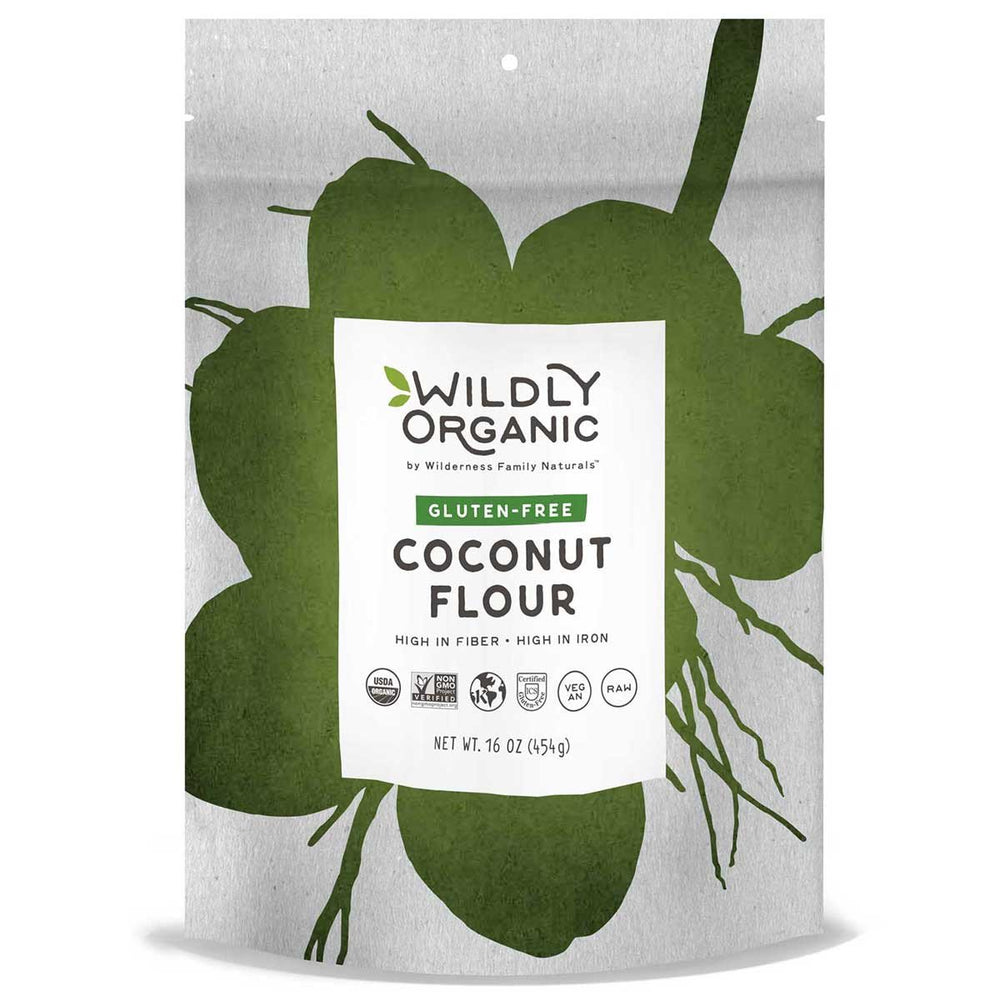
Coconut Flour - Coconut Fiber

Everything you need to know about unique, healthy, high-end flour.

Is Coconut Flour Better than Wheat?

Coconut FlourGluten problems……
Wheat is a significant part of the American diet.  Besides pies, cakes, pancakes and cookies, we eat breads, pasta, muffins, and crackers just to name a few.  Many foods are produced almost solely from wheat.  In addition, wheat flour is used to thicken most sauces and gravies.  However, as prevalent as wheat might be, many in America are developing allergies or have difficulties digesting the gluten it contains.   More and more doctors and naturopaths are suggesting gluten-free diets for people struggling with their health. 

What is Gluten?  Gluten is the protein part of the grain.  It is the “glue” that allows dough to rise by trapping air bubbles created by leavening agents or yeast.  Gluten content is higher in wheat than any other grain.  This is the reason wheat breads raise so well and pastries can become light and fluffy. 

Blood sugar and glycemic index troubles…..
Another problem with wheat is the rate at which it increases blood sugar levels (its glycemic index). Wheat based foods contain a sizeable amount of carbohydrate which can cause blood sugars to rapidly rise, followed by an insulin response.  This then results in fat deposition, increased inflammation and a weakened the body.  It is because of this problem that the Atkins and South Beach Diets have become so popular.  The detriments of high carbohydrate diets and the resulting glycemic are very important issues with the current American diet.  Because of this, carbohydrates have undergone serious scrutiny from educated and health minded individuals.  In research done by Dr. Trinidad, it was shown that if a product made with white flour and white sugar had just 25% of the flour replaced by coconut flour the rise in blood sugar amongst the participants as well as the glycemic index of the food were significantly affected. More information on Coconut Fiber and Health.

Coconut Flour vs. other Wheat Alternatives
Wheat alternatives are commonly flours made from rice, soy and potatoes.  Even though these products may take care of gluten allergies and some digestive issues, most substitutes for wheat are still high in carbohydrates and exhibit a high glycemic response.  Unfortunately, the taste and texture of products made with wheat alternatives are also not nearly as appetizing as the products they replace.  In addition, these products are often loaded with flavor enhancers and sweeteners to help make them more palatable.  Normally, products made with wheat alternatives are “enjoyed” only by those who are forced to do without wheat and have no choice.

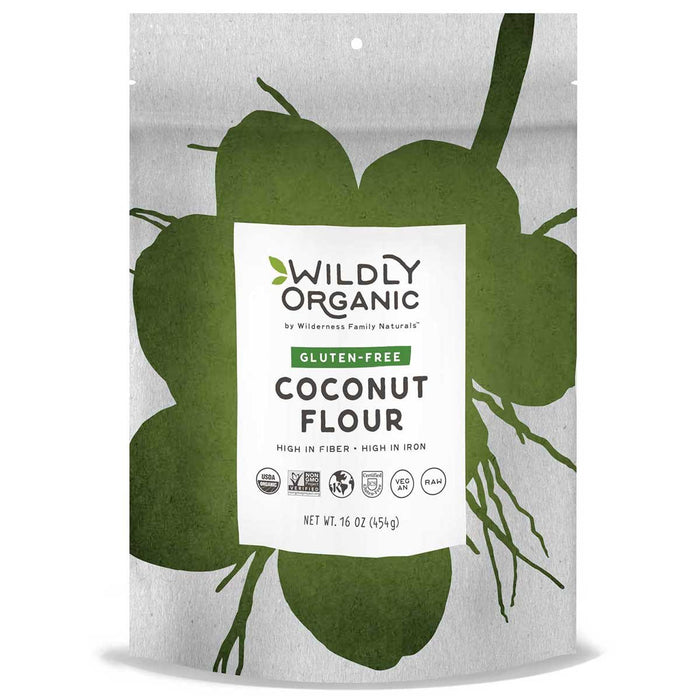
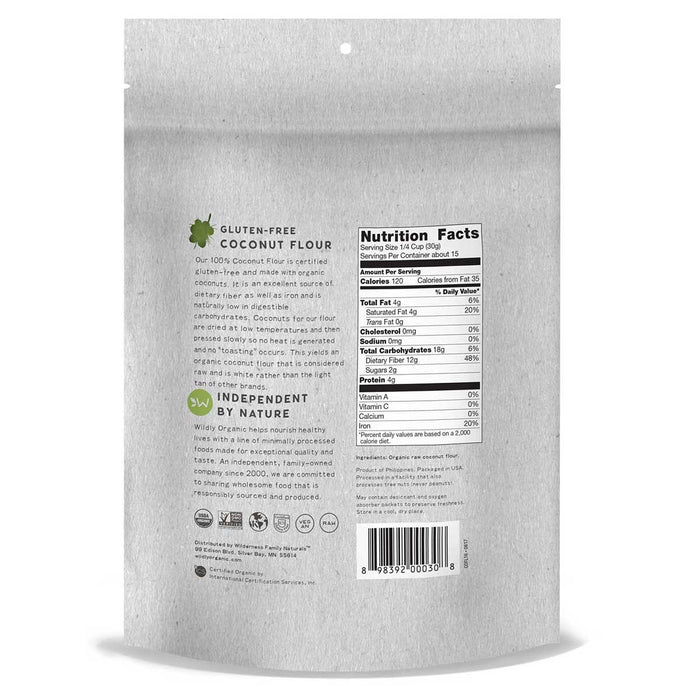
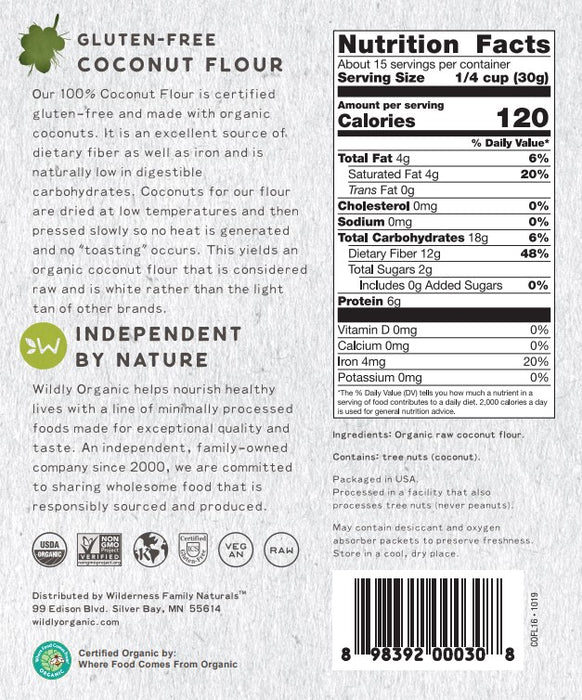
Coconut Flour/Fiber
1 Kg (2.2 lbs.)
$11.85
11.34 Kg (25 lbs.)
$101.48
Sample, limit of 4
$1.00
Cooking w/Coconut Flour by Bruce Fife, N.D.
$12.00
Links on this Page
Similar Products


Cooking with Coconut Flour, by Bruce Fife

List price: $14.95
Our Price: $12.00

Click Here to order before we run out!

Coconut Flour can be used to make a variety of delicious baked goods, snacks, desserts, and main dishes. It is the only flour used in most of the recipes in this book.

These recipes are so delicious that you won’t be able to tell that they aren’t made with wheat. If you like foods such as German chocolate cake, apple pie, blueberry muffins, cheese crackers, and chicken pot pie, but don’t want the wheat, you will love the recipes in this book!

More About Coconut Flour and Fiber

What Is So Special About Coconut Flour?
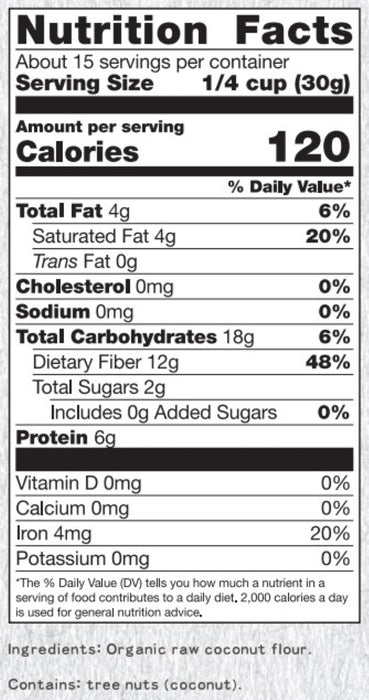
Coconut flour is uniquely different from all other wheat alternatives.  It is naturally low in digestible carbohydrates and contains no gluten. It has less carbohydrate than soy or nut flours while providing a good source of protein and fiberCoconut flour is 4 times higher in fiber than oat bran, 2 times higher in fiber than wheat bran, and 3 times higher in fiber than ground flaxseed.  Unlike other fibers, coconut flour/fiber can be used as a flour to make delicious bakery products and main dishes that are much tastier than wheat alternatives.  Coconut flour also contains more protein than white or rye flour and cornmeal.  It has about as much protein as you find in buckwheat and whole wheat flours.

Breads made with coconut flour are light and soft and have a wonderful taste and texture.  A lovely book with lots of information on coconut flour and many, many recipes is:  Cooking with Coconut Flour – A delicious low-Carb, Gluten-Free Alternative to Wheat by Dr. Bruce Fife, N. D. All recipes in the book are wheat-free, gluten-free, soy-free, trans-fat free, artificial sweetener-free, and yeast-free.  Most of the recipes are or can be low sugar and low carbohydrate.  They give an option of using coconut oil and butter, and sugar or stevia (or another sweetener).  Most of the recipes are dairy-free, relying on the coconut milk in place of cow’s milk or cream.  Whole natural ingredients are recommended over artificial or highly processed ones.   And the result is foods that are both healthy and delicious.

Some of the health benefits of dietary fiber include:

  • Promotes heart health
  • Promotes colon health
  • Supports the immune system
  • Facilitates healthy digestion and absorption
  • Allows for maximum absorption of vitamins and minerals
  • Assists in the body’s natural removal of toxins
  • Helps maintain healthy cholesterol levels  

Coconut Flour and Toxins in the Body
Fiber is the “house-cleaner” of the digestive tract. Parasites, toxins and carcinogens can all be cleaned out of the system by fiberMany studies have discovered a direct relationship between high-fiber diets and low incidence of intestinal problems.  A direct link between the amount of fiber in a diet and the amount of health an individual experiences has been proven over and over again by research.   Fiber is one of nature’s ways of keeping our intestines clean, healthy and functioning smoothly.  It was approximately 400 BC when Hippocrates wrote “all disease begins in the gut” and there appears to be some evidence that he was at least partially correct.  Many now believe that dietary fiber has at least some connection to overall health far beyond just bowel function.

Fiber, Bacteria and Intestinal Health
The colon is home to an abundance of micro organisms.  In a healthy system, the good bacteria, which are of great benefit to us, significantly out number harmful bacteria.  These good bacteria mainly live off fiber in our foods and absolutely thrive when we eat foods high in fiber.  They produce for us by-products that are very beneficial such as vitamins and short chain fatty acids.  These nutrients especially benefit cells lining the intestinal tract and strongly support good intestinal health.  They also keep unfriendly bacteria and yeast from causing damage through competition and their by-products.

Harmful bacteria, on the other hand, thrive on sugars and refined carbohydrates.  They flourish on the Standard American Diet (SAD diet) which is high in carbohydrates, low in fiber and loaded with chemicals.  In addition, these harmful bacteria release, as by-products, toxic substances that hurt the cells lining the intestinal tract.  In a slow-moving unhealthy system, a significant amount of these toxins become absorbed and reabsorbed into the blood stream making the body more toxic and unhealthy.  These injurious organisms do not create any nutrients that help the cells lining the intestinal tract and only cause destruction. 

Coconut Flour and Heart Health
Dietary fiber is known to increase insulin sensitivity and slow the release of blood sugar from the digestive tract into the blood stream (lower the glycemic index).   It has a positive effect on blood lipid profiles especially when it comes to lowering LDL cholesterol and triglycerides and increasing HDL cholesterol . Several studies have been done over the past few years by Dr. Trinidad in the Philippines.  They are very eye opening.  Research has shown that coconut consumption decreases oxidation products in the heart and increases the activity of superoxide dismutase and catalase (antioxidant enzymes made by the body) that protect cells from free radical damage.  This last link will take you to a page filled with research done in a number of countries linking high fiber diets with a low risk of heart related problems. 

How Coconut Flour as a Functional Food
Functional foods are those that provide health benefit beyond their basic nutrition.  Dr. Trinidad, in her research,  used three parameters to determine the ‘functionality’ of coconut flour as food:  fermentability, mineral availability, and the glycemic index.  The fermentability showed that there is a significantly greater dietary fiber content in the coconut flour than other local fiber sources like banana, cassava, wheat and rice flours. She also found that the minerals available in coconut flour are: iron, zinc, calcium, and phytic and tannic acids.   Moreover, as coconut flour itself is already a good source of dietary fiber, it does not affect the mineral content of other food when the coconut flour serves as an additive.  According to Dr. P. Trinidad of the Food and Nutrition Research Institute (FNRI) of the Department of Science and Technology (DOST),  coconut flour is rich in dietary fiber that lowers the glycemic index of foods it is added to,  while aiding in the digestion and absorption of vitamins and minerals.  The physical and chemical properties of dietary fiber have an important role in the release and absorption of nutrients in the Gastro-Intestinal Tract (GIT). Thus, she believes it is a promising functional food.  

See:
"Coconut Flour from Sapal: A Promising Functional Food" by Dr. P. Trinidad, paper presented during the 17th National Coco Week, 27 August 2003, PCA Auditorium, Diliman, Quezon City, Philippines.

How to Use Coconut Flour in Your Kitchen:

Adding Coconut Flour to Your Favorite Recipe:
Because Coconut flour does not contain any gluten, it will fall apart if you substitute it 100% for another  flour in a wheat based recipe.  You can, however, substitute up to 25% (15-20% is best) of that flour with coconut flour.  In addition, whatever amount of coconut flour you use, you need to increase the liquid in your recipe by that same measure.  So, for example, if your recipe calls for 2 cups of wheat flour, you could use 1 ½ cups of wheat flour, ½ cup of coconut flour, and ½ cup of additional liquid such as milk, water, or juice.  This will greatly increase the fiber content of that food and lower its glycemic index. 

Using 100% Coconut Flour:
If you want to make foods that are 100% coconut flour with no other flours, we suggest you pick up the book “Cooking with Coconut Flour” by Dr. Bruce Fife (Link to order page) for initial guidance.  These recipes came about by trial and error and were the foundational recipes and guidance for all the other recipes you will find on the internet.  Prior to this book, recipes for using 100% coconut flour did not exist, not even in the Philippines or any part of Asia.  As a rule, you need to add approximately 6 eggs for every ½ cup of coconut flour you use in your recipe and will need to increase liquids because the fiber greatly absorbs liquid.  These eggs will take the place of the gluten found in wheat, and help all that fiber to stick together.


Other people who want to increase their fiber intake but do not want to bake or make anything, add coconut flour to smoothies. Coconut flour is more palatable in smoothies than any other fiber, even though it supplies significantly more roughage than any other source.

Back to Top

Coconut Flour Recipe


Coconut Balls

Ingredients:

  • Sweetener: approximately 3/4 cup (may use any sweetener of your choice
  • Eggs: 2
  • Coconut Flour: approximately 2 cups
  • Orange peel from 1 orange

Whisk the eggs until they are stiff together with the sugar. Add the grated orange peel. When the mixture is frothy, add the coconut flour. Add enough coconut flour until it is crumbly but still soft and moist. Let it rest for 5 minutes.

Grease an oven pan and form small balls with your hands from the mixture. The mixture should be just perfect for making into balls. Arrange them on the pan. Put them into the oven when it is hot and bake for 15 minutes at a medium temperature.

For more recipe ideas check out Dr. Bruce Fife's book Cooking with Coconut Flour.

Back to Top of Coconut Flour

Home Page | Our Products | How to Order | Health Information | About Us | Exchanging Links | Contact Us | Privacy Policy

Wilderness Family Naturals ©2005

† These statements have not been evaluated by the Food and Drug Administration. This product is not intended to diagnose, treat, cure or prevent any disease.

Nutritionists and other experts in the field of health hold a variety of views.  This index is not intended to diagnose or prescribe.  Included are the herbs we carry and their medicinal properties.  This does not constitute medical or professional advice, but rather information obtained from many books on herbs, and herbal remedies.  Any person making the decision to act upon this information is responsible for investigating and understanding the effects of their actions.  The information contained here comes mainly from 5 books: Herbal Healing for Women by Rosemary Gladstar,  The Little Herb Encyclopedia by Jack Ritchason, N.D.  The Green Pharmacy by James Duke, Ph. D, Back to Eden by Jethro Kloss, and The PDR for Herbal Medicines.